I have been afraid of spiders for as long as I can remember. Not mildly uncomfortable — genuinely, physically terrified. The kind of fear where you see a spider on the wall and your body makes a decision before your brain does. I have left rooms. I have slept on the couch because I spotted a daddy longlegs near the bedroom door. I once made my wife drive forty-five minutes back to our house to remove a spider from the bathroom before I would go inside.
My wife, who is a saint, eventually suggested I see someone about it. Not unkindly. Just practically. 'You're a grown man who is afraid of things smaller than a quarter,' she said. 'There are people who fix this.'
The therapist she found for me was Dr. Chen, a compact, cheerful woman who specialised in specific phobias. In our first session, she explained what we were going to do: systematic desensitisation. We would build a 'fear hierarchy' — a ladder of spider-related situations from least to most frightening — and work our way up it, one rung at a time.
My hierarchy started at the bottom with the word 'spider.' Then a cartoon spider. Then a photograph of a spider. Then a video. Then a spider in a sealed container across the room. Then the container closer. Then the container open. Then a spider on a table near me. Then a spider in my hand. I laughed when she showed me the top of the hierarchy. 'That will never happen,' I said. She smiled. 'That's what everyone says.'
The first few sessions were genuinely unpleasant. Looking at photographs of spiders while doing controlled breathing exercises felt absurd and also terrifying. My palms would sweat. My heart rate would spike. Dr. Chen would ask me to rate my distress on a scale of one to ten, and I would say 'eight' while looking at a picture of a garden spider, and she would nod calmly and say, 'Good. Stay with it.'
The thing about exposure therapy is that it works on a principle called habituation. When you stay in a feared situation long enough without anything bad happening, your nervous system eventually stops treating it as a threat. The anxiety peaks, holds, and then — if you don't escape — it drops. Every time you stay, the peak gets a little lower and the drop comes a little faster.
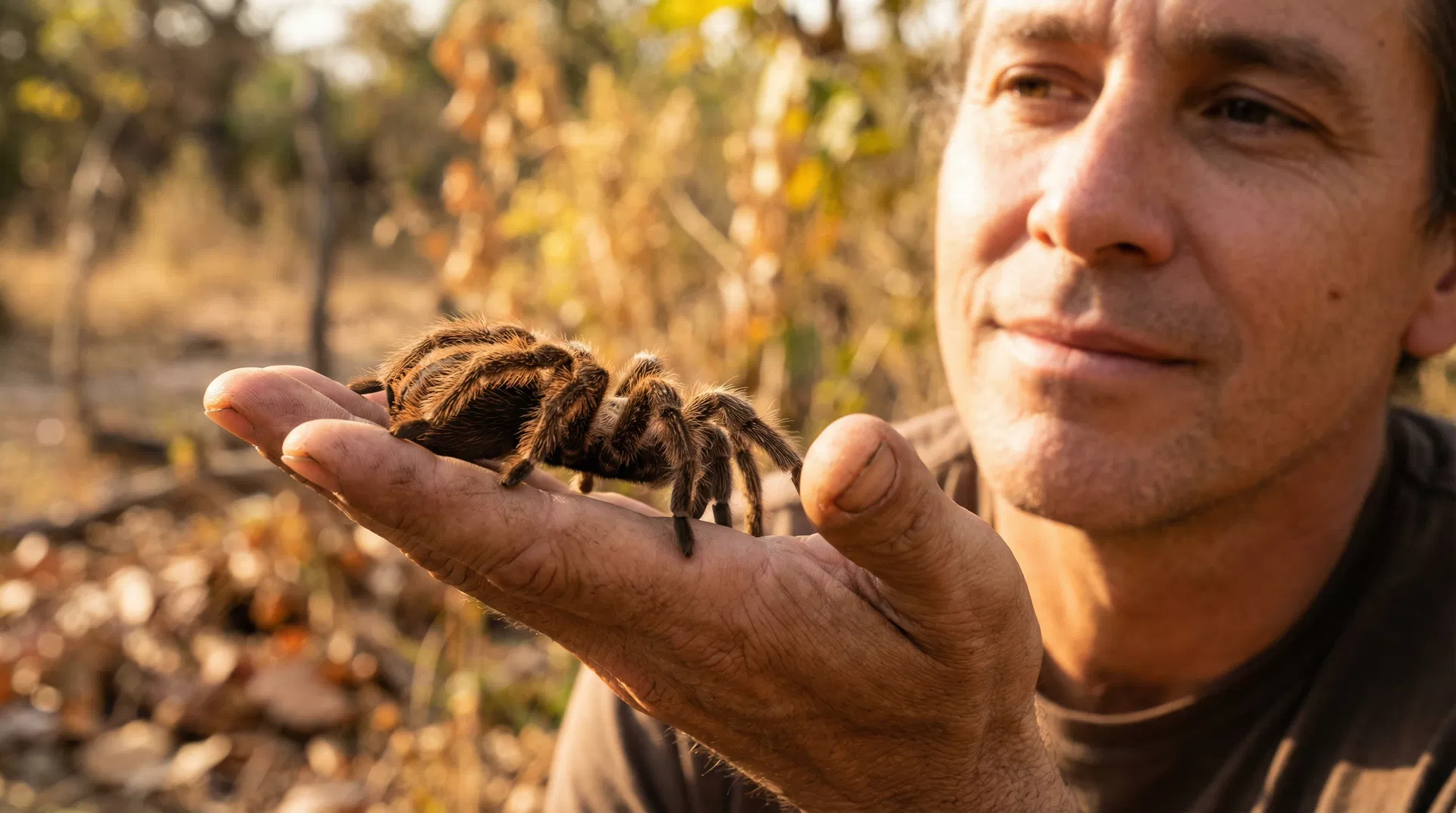
By session four, I was in the same room as a live spider in a terrarium. By session five, the terrarium was open and the spider — a Chilean rose hair tarantula named Rosie — was on a table in front of me. By session six, Rosie was walking across my outstretched hand.
I won't claim I felt nothing. My heart was beating fast and my breathing was shallow. But the sensation was different from what I had expected. It wasn't the overwhelming, get-me-out-of-here terror of before. It was something more like intense alertness. Rosie's feet were surprisingly light. She moved slowly, almost thoughtfully.
I held her for about ninety seconds before she was returned to her terrarium. Then I sat very still for a moment, and then I started laughing. Not from relief — from genuine surprise. The thing I had been afraid of for thirty-eight years had just walked across my hand, and I was fine.
I still don't love spiders. I wouldn't choose to hold one for fun. But last month I found a wolf spider in the kitchen, and instead of evacuating the room, I got a glass and a piece of card and put it outside. My wife watched from the doorway with an expression I can only describe as cautious optimism.